In this essay I will search out the meaning of the word Korban and what Yeshua is rebuking in the Jewish tradition. Yeshua cites a principle of the Torah and a verse from the prophets to clarify a halakha.
The Contention
Beginning in verses 1-2, we have Jewish lawyers and scholars ask Yeshua for a justification for their deviation from normative practice. They observe that Yeshua’s disciples don’t perform netilat yadayim (ritual hand washing). They ask Yeshua for a justification for their deviation. Yeshua then gives them a halakhic principle derived from Exodus 20:12 and 21:17, namely, parents are kibbed (honored/heavy) and anyone who treat them as meqallel (literal verb: curse; but also in the sense to treat as of little concern, lightly) is to die for doing so. The Torah principle is that the concern for parents is very important. Yeshua probably even agrees with the initial premise of the scholars to ‘honor the elders’ traditions’.
A Traditional Ruling (Baraita) Is Cited
But then Yeshua raises a contradiction from a baraita concerning the specific wording of vows: “If one says to his father and mother, ‘Korban is anything of mine from which you may derive benefit.'” The word korban (aka. Konam)1 is a general term referring to any item sanctified to Temple offerings. But in the context of vows, Korban is a legal term referring to a case where:
A person declares for himself, or for another person, they will regard an object(s) as set apart "holy for the Temple" and off-limits to him to derive benefit; but the object(s) itself do not attain a legal status of sanctified to the Temple, rather that person will treat it as if it were sanctified.2
Handwashing Explained
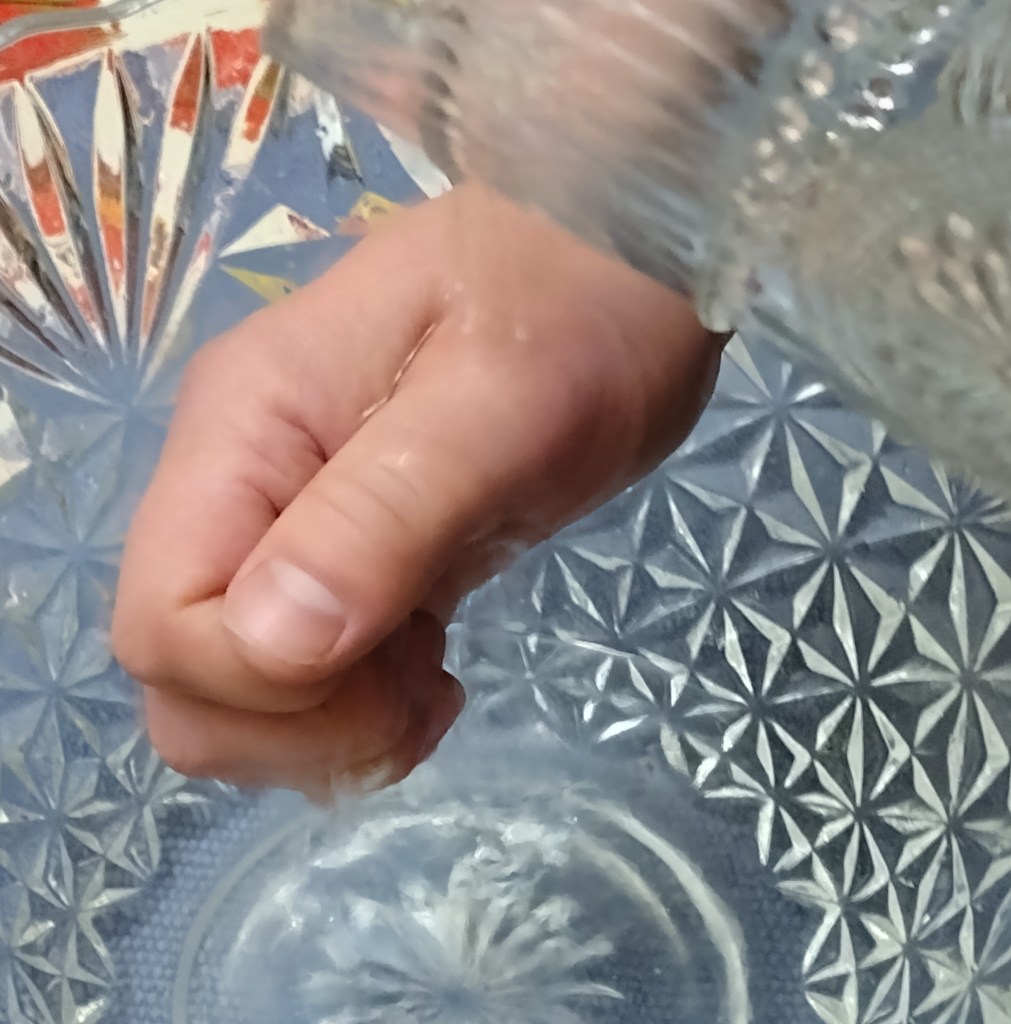
Now let’s clarify the Halakha of netilat yadayim. In the day-to-day routine of Jewish life people would sit down to eat a meal. The Pharisees created a novel tradition to wash hands every time before meals in order to prevent the possible spread of ritual impurity to others. For example, let’s say someone became a Zav (a man with a genital disease discharge, cf. Lev. 15:11), and he sat down to eat at the table without washing hands; anything he touched would become ritually impure. But this is a specific case. If he is not a Zav, it would not matter if he washes hands according to the Torah since he is not a Zav. The Pharisees extended the hand-washing every time to prevent the possibility of ritual contamination.
Tradition Lost Its Way
The korban vow wording works for many cases, but sometimes it runs desultorily concerning the Torah principle of honoring parents. Yeshua reconciles the contradiction with another verse:
“This people approaches me with their mouth, and with their lips they honor me (Kib-b’du-ni); but their heart is distant from me. Their fear of me is empty; it is taught as a mitzvah of men.”
Isaiah 29:13 (DHE)
Isaiah Clarifies The Intention Of The Torah
The contradiction is identified by Isaiah. “They honor (כבד) me”, with vows from their lips. When you utter a vow to HaShem, the intention of the heart matters. But the traditional halakhic wording for the Korban vow might distance you from honoring parents.
Further, Isaiah 29:13 is read in a chiastic ABA structure. In the B portion of the chiasm, “distant (rachaq, רחק) heart” relates to its opposite, “Korban, a vow brought near” . So the “mitzvah of men” in A’ of the chiasm teaches: If your vow can’t honor (כבד) your parents, it has become a mitzvah of men.
Conclusion
Yeshua created a delightful midrash about ritual purity. In verse 11, the reconciliation is stated. The words we speak are most often the thing that defiles us. On the other hand, the things we put into our bodies usually do not make us impure. We must learn to be careful with our speech! The words out of our mouths might just make us like a Zav!
 Beit Ya'acov Messianic Jewish Society
Glory to Jesus Christ! This evening I decided to find the address of the Messianic community and found your address.. I have long been interested in such communities, I consider myself one of God’s people and love them, but this year the Lord is leading me so that I draw closer to him and His decrees🙏🙏 🙏. I liked what I read in the description.. We live in Staulton and we do not have our own transport, because our move was facilitated by military actions in Ukraine.. Perhaps there is some family that lives in Staulton who could to help us be at the service in your church or perhaps there is such a church in Staulton so that we can perhaps get there on our own? I ask the Lord that we may attend such a church🙏🙏🙏. I will be very grateful to you if you can help us with this.. 🙏🙏🙏 God bless you 🙏♥️🎁👑! Natalia.
LikeLike